It sounds like a small ask. Sometimes it even sounds like flattery, proof that someone cares enough to notice what you’re wearing. But ask any man who has heard this line from a girlfriend, a mother, or a friend before a night out, and he’ll tell you it rarely feels like a compliment. It feels like a quiet correction, a sign that whatever he chose wasn’t quite right for the occasion, or for her. The comment usually shows up in low stakes moments too. A dinner reservation, a family function, a casual outing where nobody else seems to be trying particularly hard either. And yet the remark singles him out, as if effort is something he’s expected to prove rather than something he already put into getting dressed at all.
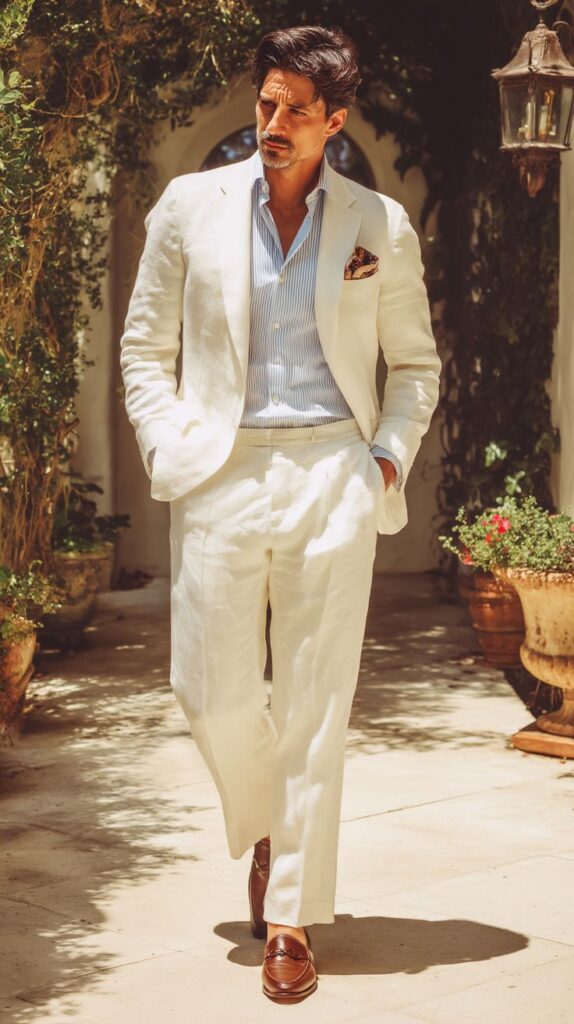
The phrase carries its own set of assumptions. It suggests there’s a “correct” version of dressed up that most men are falling short of, usually involving a collared shirt, real shoes instead of sneakers, and clothes that read as deliberate rather than convenient. It also assumes men aren’t already making choices about how they look, when in reality most are, just according to a different set of priorities.
Sister Says
The truth is, most men already know exactly what they’re wearing and why, and being told to dress up more rarely introduces new information so much as it reframes a choice as a shortfall. A man who shows up in a plain tee and jeans likely didn’t forget how to dress. He decided that was the right call for the day, whether out of comfort, habit, or simply not wanting to overthink an outfit for something low key. Hearing that he should try harder turns a deliberate decision into an oversight, and that distinction matters more than it gets credit for. It also points to a broader double standard, where women are expected to put in visible effort constantly, while men are only asked to match that energy on specific occasions, as if effort is situational for one gender and constant for the other. What often gets lost is that dressing up, when a man actually wants to, isn’t a burden. It can be genuinely enjoyable, a way of showing up for an occasion rather than a box to check because someone else expects it. The issue was never the act of dressing up itself. The issue is being told it’s owed.
TL;DR
“You should dress up more” can feel like an innocent nudge, but it often carries an assumption that men are perpetually underdressed unless proven otherwise. Most men choose their outfits with intention, whether that’s five minutes of effort or fifty, and being told to step it up overlooks the reasoning behind that choice. Dressing up should be something men get to opt into when it actually means something to them, not a standard they’re being quietly measured against.
Sister Shops:
Turms – SMART LEGACY INTELLIGENT POLO
ZARA – SMART SHOES
Off Duty – Drift Bootcut Jeans