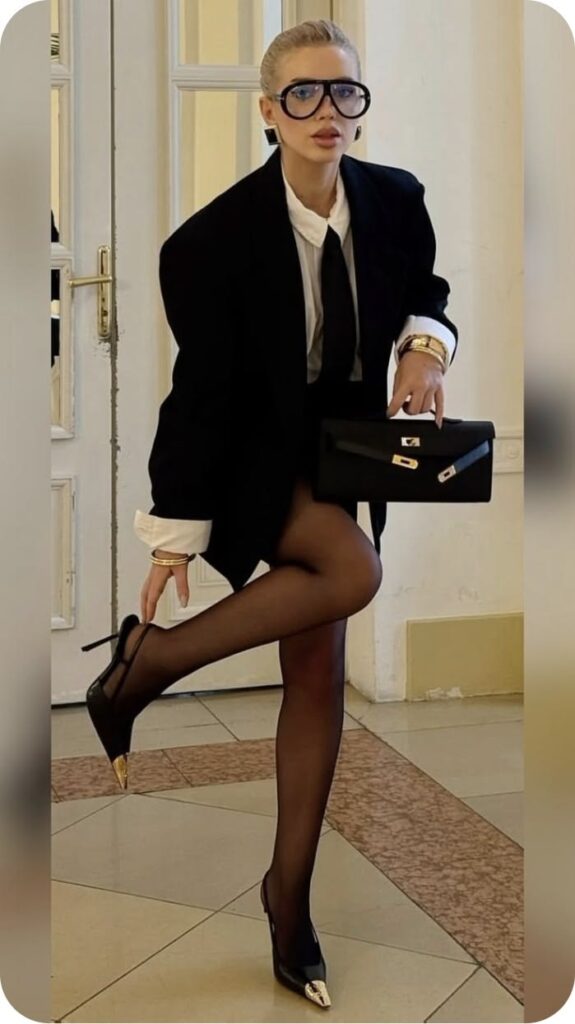
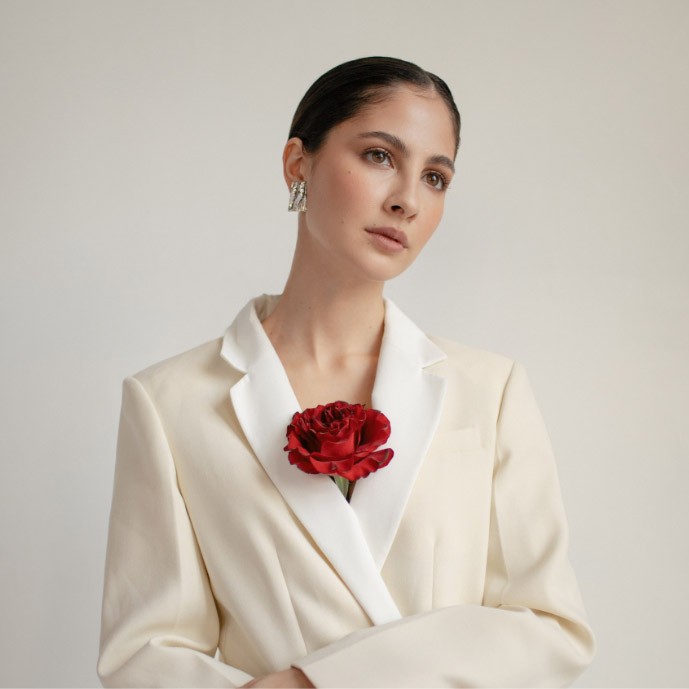
The whole point was to look like you belonged in a boardroom that wasn’t built with women in mind. You dressed to be taken seriously, and taking yourself seriously meant dressing like the men already in the room.
That idea has cracked open. Gen Z and millennial women walking into offices, pitch meetings and client calls today are not reaching for the same uniform their mothers wore to work. The suit hasn’t disappeared, but it has stopped being the only answer. Power dressing now stretches to include a co-ord set with sneakers, a boxy blazer thrown over a slip dress, or trousers paired with a corset top. The common thread isn’t the silhouette anymore. It’s the confidence the person wears alongside it.
Sister says
Modern power dressing is less about following a rulebook and more about signalling intent through fit and attitude, and that starts with how the blazer itself has changed. Instead of a fitted blazer nipped at the waist, women are picking oversized or boyfriend blazers that borrow authority from menswear without trying to shrink themselves into it, and this looser structure ends up setting the tone for everything else in the outfit. Under it, fabric choices have gotten softer too, satin shirts, knit vests over collared shirts, waistcoats worn as outerwear rather than layering pieces, all doing the job that stiff formal fabric used to do on its own.
That same change shows up in colour. Black, navy and grey used to be shorthand for serious. Now a burgundy suit or a chocolate brown separate or an emerald blazer walks into a pitch meeting and reads as just as authoritative, because the idea that muted equals professional has lost its grip. Footwear has followed the same logic. Loafers have become the unofficial power shoe, and sneakers with tailored trousers show up just as often in creative and startup spaces, where the old heels-only rule never really made sense to begin with. Comfort stopped being treated as the opposite of competence.
Even accessories have entered the conversation the same way. A statement bag or bold jewellery isn’t seen as unprofessional anymore, it’s read as personal branding, which is really what ties all of this together. The workwear women choose today borrows from streetwear, from menswear, from evening wear, stitched into something that says competence doesn’t need a uniform to prove itself.
Sister rules:
Mix at least one formal piece with one casual piece in every outfit, a tailored trouser with a plain tee or a blazer with denim, so the look doesn’t tip too far into either stiff or sloppy.
Get your basics tailored to your body instead of buying a size up or down and calling it oversized. The difference between borrowed and baggy usually comes down to a good tailor.
Don’t try to make every piece in the outfit make a statement. Pick one thing to stand out.
Repeat pieces across contexts instead of treating workwear and evening wear as separate wardrobes. A blazer that works for a client meeting should be able to walk into dinner with a different top underneath.
Build the outfit around how you’re going to spend the day, not around how it looks standing still. A silhouette that survives a commute, back to back meetings and a coffee run is doing more for you than one that only photographs well.
TL;DR
Power dressing has moved on from the strict suit and heels formula. Blazers have gone looser, colours have opened up beyond black and navy, and loafers or sneakers now do the work heels used to. The shift isn’t about abandoning structure, it’s about wearing it on your own terms.
Sister Shops:
After Studio – oversized blazer
Global Republic – Pastel Green Satin Loose Formal Shirt